Sage
You do not know a thing until you can teach it. Sage gives you someone to teach.
The idea
The Feynman technique says that if you cannot explain a concept in plain language, you have not learned it. The problem is that it needs a listener, and a listener who asks the right questions.
Sage is that listener. You explain a concept to Pip, and Pip asks you the question your explanation left open. Not a quiz. The specific gap in what you just said.
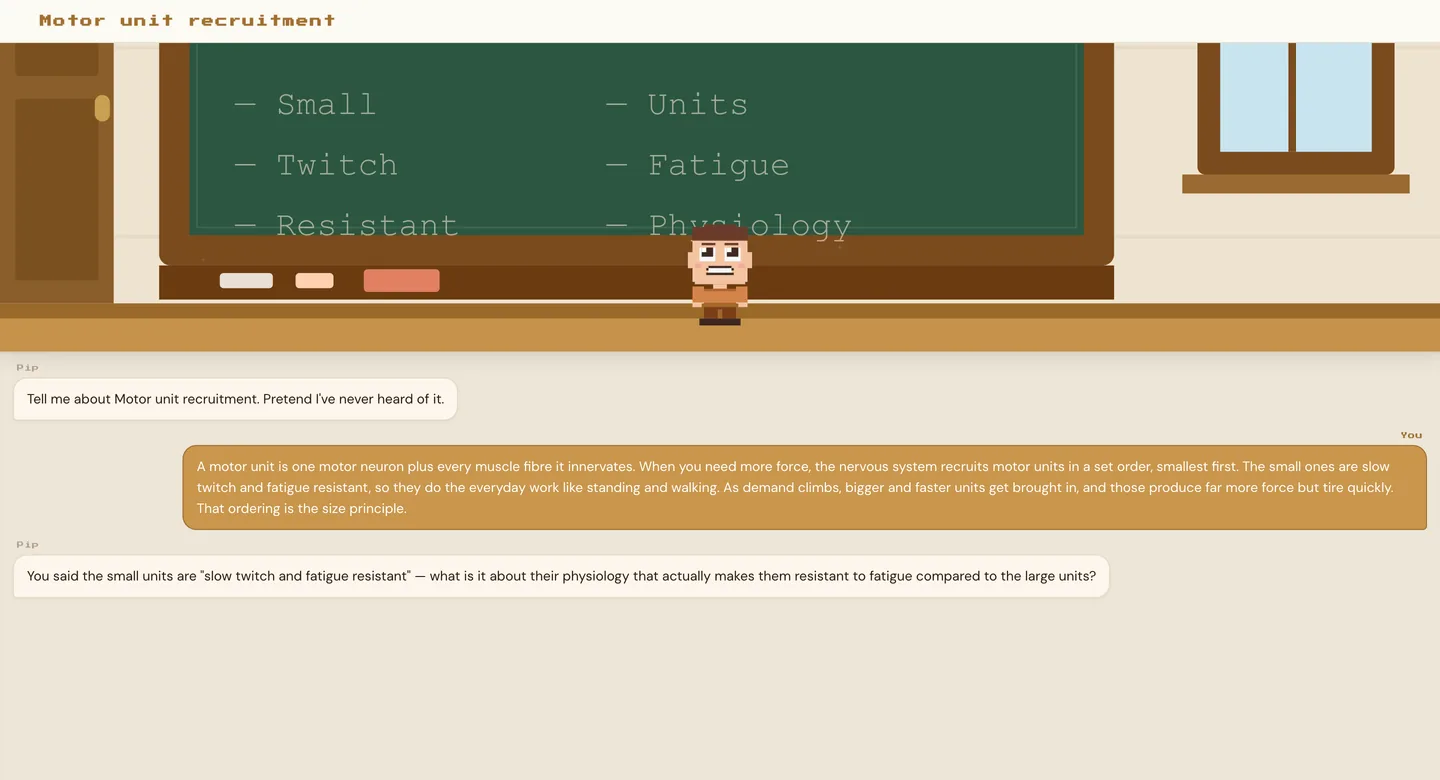
How a session runs
- You pick the topic and how hard it should be
- Student mode has you teach the concept. Adversarial plants mistakes for you to catch. Quick check is three recall questions. Same topic, three different kinds of pressure.
- You can talk instead of type
- The session is voice first, because saying a thing out loud is closer to teaching it than writing it. Typing is there for the library and the bus.
- The follow-up comes from your words
- Pip quotes the phrase you used and asks what is underneath it. The blackboard fills with the terms you actually said, so you can see what your explanation leaned on.
- Weak spots come back
- Each session is scored and scheduled. A concept you explained badly returns sooner than one you explained well, so the gaps surface instead of hiding behind the topics you enjoy.
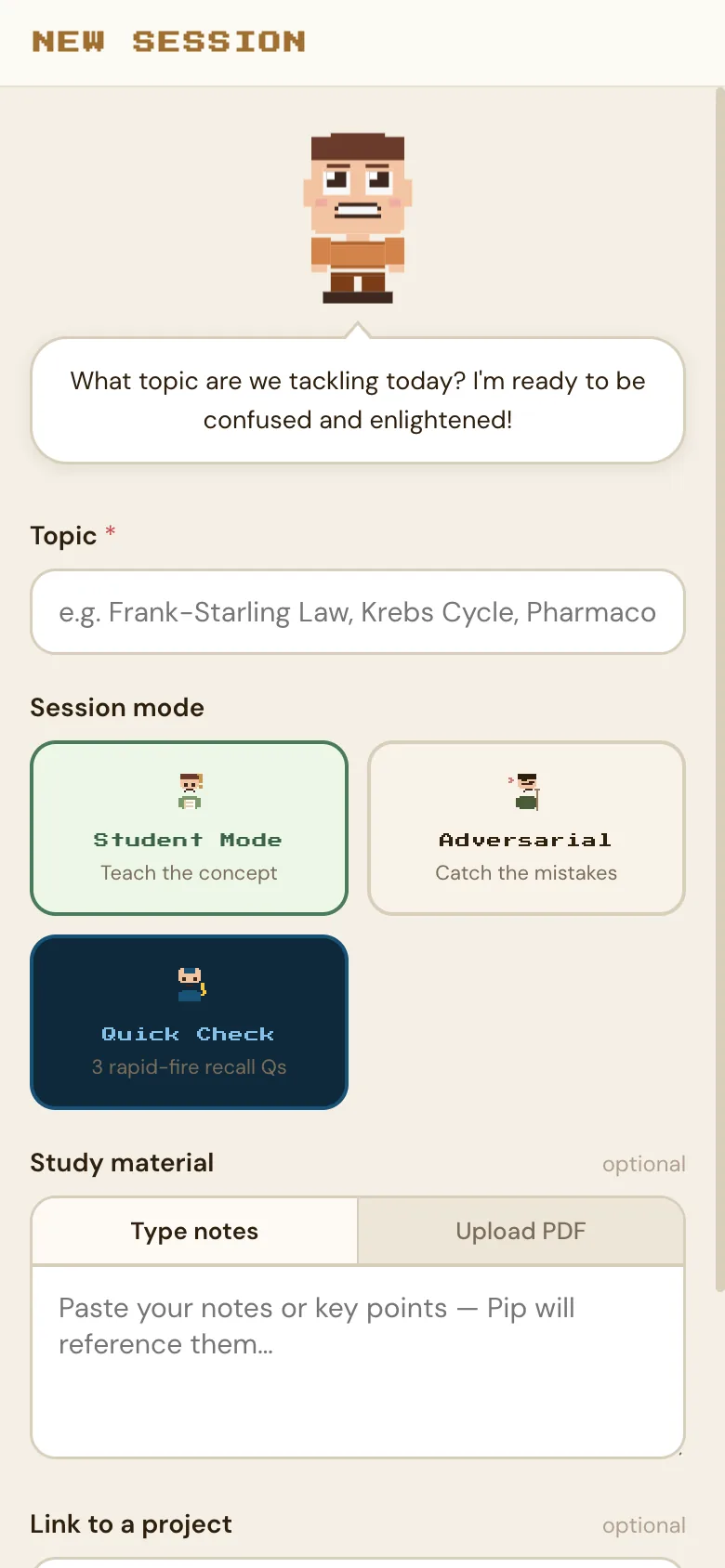
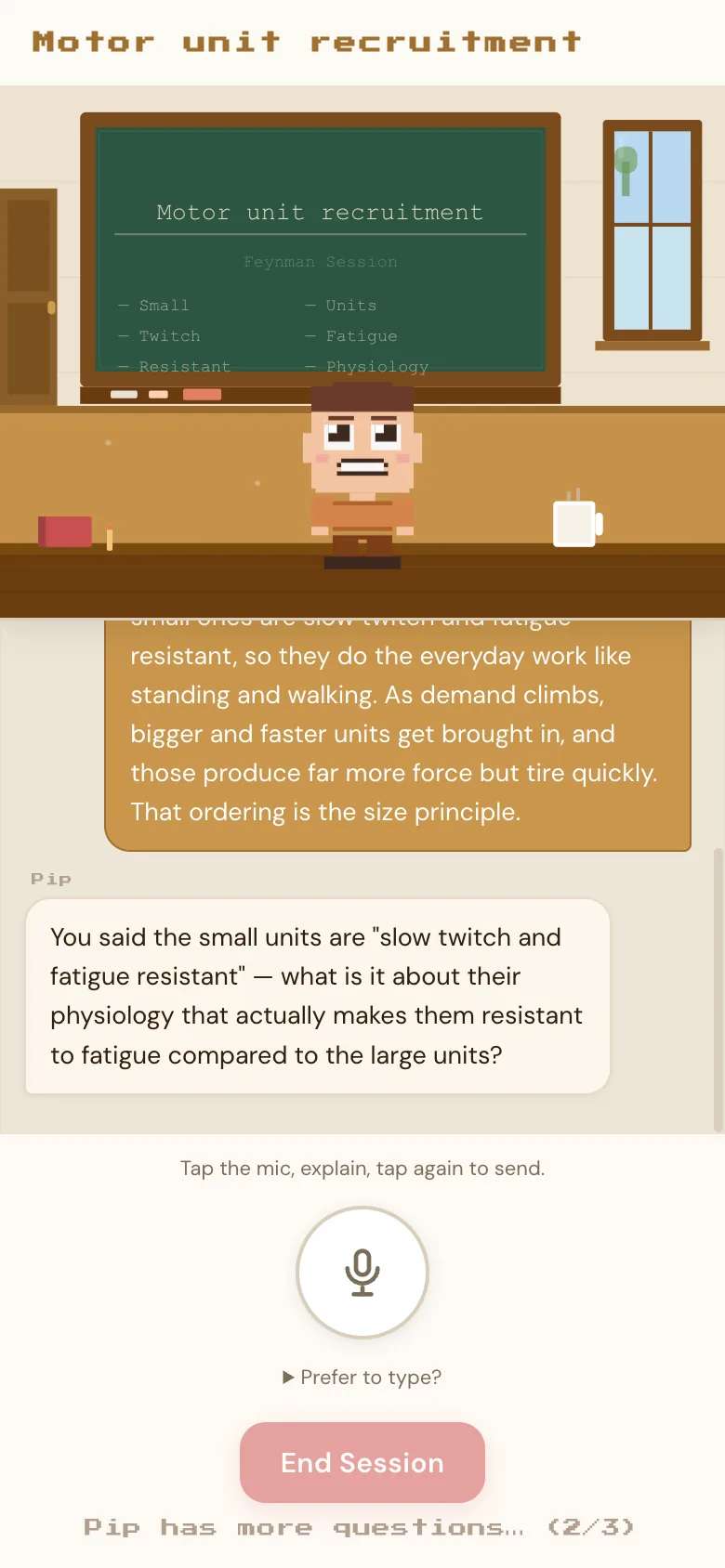
Set the topic, pick how hard Pip should be, then explain. It runs the same on a phone as on a laptop.
Built with
React and TypeScript on the front, Supabase for accounts and progress. It tracks what you have explained well and what you keep skipping past.
Sessions are scored and scheduled to come back. A concept you explained badly returns sooner than one you explained well, so the weak spots surface instead of hiding behind the topics you enjoy.